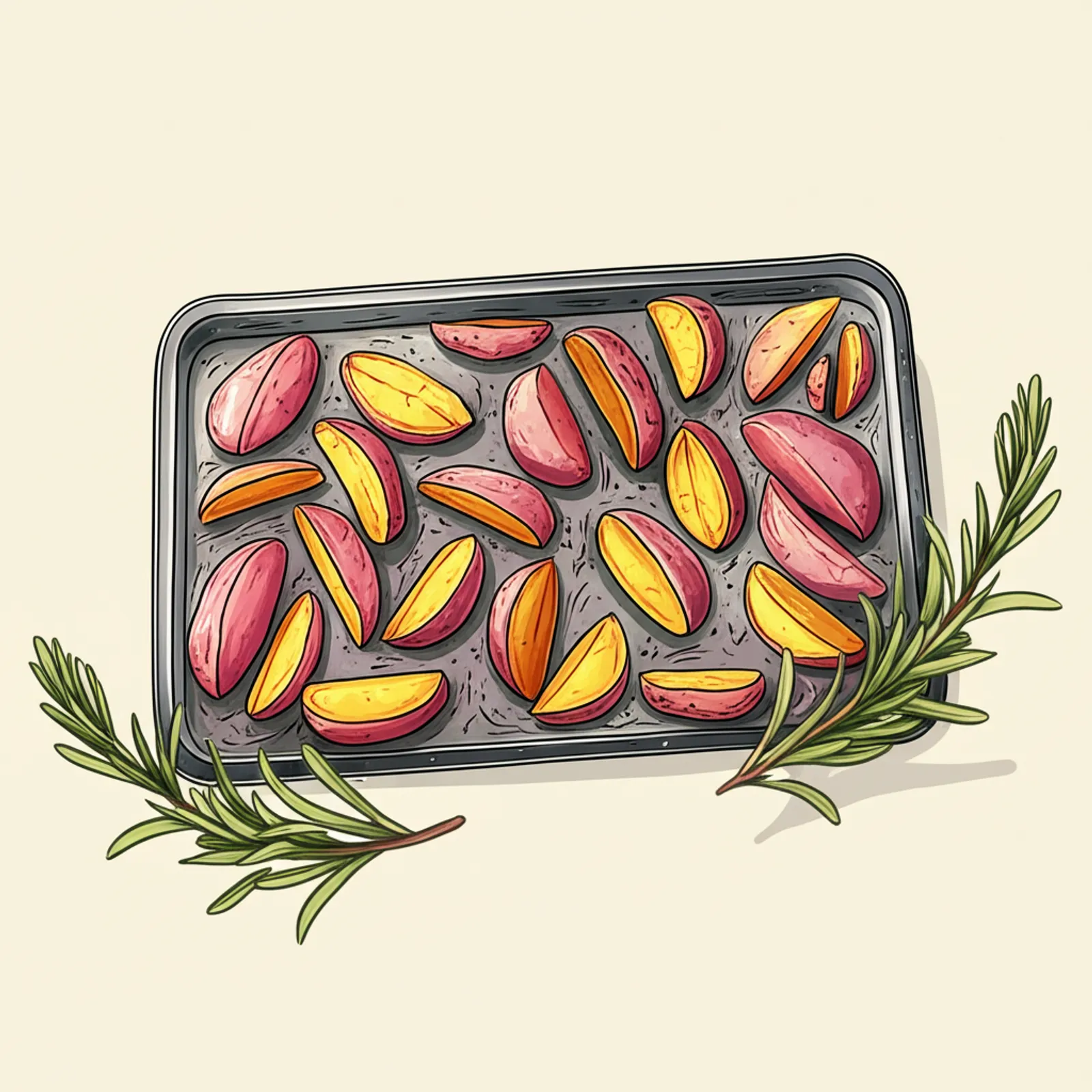
When you want crisp edges and a creamy middle, here's why Desiree deserves the first test batch — and how to get it right.
If you only remember one thing, remember this: Desiree roasts best when you keep the skin on, preheat the tray, and give it enough surface area.
The variety sits in a sweet spot that most potatoes don’t hit. It’s waxy enough to hold shape through high heat without crumbling, and floury enough to develop a proper crust around a creamy interior. That balance is why it works equally well on a weeknight sheet pan and a Sunday roast tray.
Why starch type matters for roasting
Not all potatoes roast the same way, and the reason is starch structure.
Floury (high-starch) varieties like Russet Burbank and King Edward have loose, granular starch cells. When heated, these cells separate easily — which is great for fluffy mash but means roast pieces can break apart. You get more surface roughness (good for crisping) but less structural integrity.
Waxy (low-starch) varieties like Charlotte and Kipfler have tightly packed starch cells that hold together well. They keep their shape beautifully but don’t develop the same fluffy interior or crispy edges.
Desiree sits in the middle — classified as Type B (all-purpose) with approximately 21.5% dry matter. This means the exterior gets rough enough to crisp, while the interior stays creamy without collapsing. The pink-red skin adds a visual element that white-skinned varieties simply cannot replicate.
Roasting Performance by Variety
| Variety | Starch type | Edge crispness | Shape retention | Best for |
| Desiree | All-purpose (B) | Very good | Excellent | All-round roasting, skin-on trays |
| Russet Burbank | Floury (C) | Excellent | Poor — crumbles | Single-layer, minimal handling |
| Yukon Gold | All-purpose (B) | Good | Good | Buttery roast, gentle handling |
| Maris Piper | Floury-leaning (B/C) | Very good | Good | Classic British roast |
| Charlotte | Waxy (A) | Moderate | Excellent | Herbed baby roast, salad-ready |
| King Edward | Floury (C) | Excellent | Moderate | Traditional Sunday roast |
What we found
Kitchen test note
Desiree gave stable cube shape at 220°C after a rough parboil and oil toss. Edge crispness developed within 25 minutes. Fewer broken pieces than Russet or King Edward on the same tray. The red skin held colour well through roasting — a visual advantage that no white variety can match.
The reliable Desiree roasting method
This works every time. No tricks, no unusual equipment.
1. Cut and size consistently. Halve or quarter into pieces roughly the size of a golf ball. Uniform size means uniform cooking. Don’t peel — the skin adds structure, colour, and antioxidant content.
2. Parboil for 8-10 minutes. Start in cold salted water, bring to a boil, then simmer until the edges are just soft enough to roughen. You’re not cooking them through — you’re creating the starch layer that becomes the crust.
3. Drain and steam-dry. Tip potatoes into a colander and leave for 2-3 minutes. The surface moisture needs to evaporate. This step is non-negotiable — wet potatoes don’t crisp.
4. Rough up the edges. Shake the colander or toss gently in the pot. You want the surface to look slightly furry and broken. Those ragged edges are what become golden and crunchy.
5. Preheat your tray with fat. Put a generous layer of oil (sunflower, goose fat, or olive oil) in a roasting tray and heat at 200-220°C until the oil is shimmering. This is the most important step most recipes understate. Cold oil = soggy potatoes.
6. Add potatoes to hot fat. Carefully tip the roughed potatoes into the hot tray. They should sizzle on contact. Turn once to coat all sides. Spread in a single layer with space between pieces.
7. Roast 40-50 minutes, turning once. At the 25-minute mark, flip each piece. Don’t move them more than this — every flip interrupts crust formation.
8. Season after roasting. Flaky salt, cracked pepper, and a few sprigs of rosemary or thyme tossed on for the last 10 minutes. Season at the end because salt draws out moisture during cooking.
Desiree vs the usual suspects
Most “best potato for roasting” articles say “it depends” and leave you with no actionable recommendation. Here’s ours:
If you’re in Europe: start with Desiree. The combination of reliable structure, good crust development, and distinctive red skin makes it the practical default. Maris Piper is the main alternative in the UK — slightly fluffier, but with less visual interest and no anthocyanin content in the skin.
If you’re in North America: Yukon Gold is the closest equivalent in terms of texture. Russet works for a very fluffy roast but requires more careful handling to avoid crumbling. Desiree is available from specialist seed retailers and some upmarket grocers.
If you’re cooking for presentation: Desiree wins outright. The pink-red skin against golden-crisp edges creates a contrast that white and brown-skinned varieties cannot replicate. For restaurant plating or a dinner party tray, this matters.
A note on oil and fat
Goose fat produces the crispiest results but isn’t always accessible. Sunflower oil has a high smoke point and neutral flavour. Extra virgin olive oil adds flavour but has a lower smoke point — use it at 200°C rather than 220°C. Butter burns; don’t use it alone for roasting.
The fat quantity matters: you need enough to generously coat the tray bottom. If potatoes are sitting dry in parts, those parts won’t crisp.
Scaling for crowds
Desiree scales well for large-batch roasting because it holds shape even when you’re handling a full tray. For 6-8 people, use 1.5-2kg of potatoes. The key constraint at scale is tray space — potatoes need air around them. Use two trays rather than crowding one. Overcrowded trays steam instead of roasting.
Practical call: if presentation matters and you want fewer broken pieces on the tray, start with Desiree.